When Basheer Husami of Husami & Associates took the stage at the July Legacy Club, the room leaned in. With more than three decades as a tax strategist, CPA, and wealth advisor, Basheer carries the rare ability to make the most intricate aspects of the tax code feel not only understandable, but empowering.
As founder of one of Southern California’s most trusted accounting and advisory firms, Basheer has helped families, entrepreneurs, and multi-generational estates navigate the razor-thin line between wealth creation and wealth erosion. His firm is widely respected for its excellence in complex tax planning, IRS representation, charitable structuring, and international accounting. Clients don’t just come to him for compliance; they come to him for vision—the kind of vision that redefines how wealth is preserved, grown, and passed on.
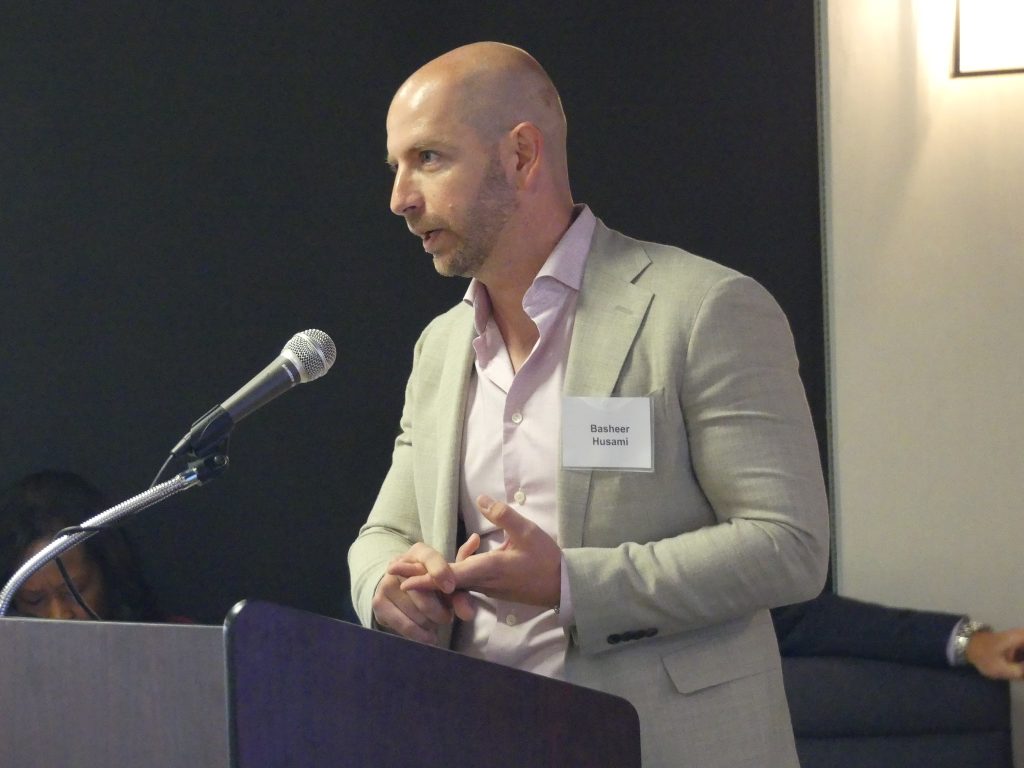
At the Legacy Club, Basheer reframed wealth management through what he calls “strategic legacy engineering.” The phrase resonated because it wasn’t theory—it was grounded in law. He spoke to the audience about the very real ways the U.S. tax code either supports or undermines generational wealth, and why families who don’t proactively plan end up leaving behind confusion, unnecessary tax burdens, and fractured legacies.
The Tax Lens on Legacy
Basheer outlined several strategies that sparked note-taking across the room:
- The Estate Tax Threshold – Families with estates valued above the federal exemption (currently set at $13.61 million per individual in 2024, but scheduled to sunset to roughly half that in 2026) must plan now. Without proactive structuring, heirs can face estate tax rates as high as 40%. “That’s not legacy,” Basheer said. “That’s liquidation.”
- The Power of the Charitable Remainder Trust (CRT) – For high-net-worth families, a CRT can provide lifetime income while deferring capital gains tax on appreciated assets like real estate or stock portfolios. At the end of the term, the remainder passes to a charity. “It’s tax efficiency married to impact,” he explained. “You’re not just giving—you’re engineering a legacy that pays forward.”
- Grantor Retained Annuity Trusts (GRATs) – A sophisticated but underutilized tool, GRATs allow families to transfer wealth to the next generation with minimal gift tax exposure, particularly effective when interest rates or asset values are low. “It’s about moving the appreciation out of your estate before the IRS has a chance to claim it,” Basheer told the group.
- Step-Up in Basis Rules – He emphasized how step-up provisions allow heirs to inherit assets like real estate or stocks at current market value, wiping out decades of capital gains taxes. But he warned that “relying only on the step-up is shortsighted—Congress has debated limiting it. A smart family doesn’t gamble legacy on political winds.”
- Philanthropy as Tax Strategy – Beyond CRTs, he spoke of donor-advised funds and private family foundations as vehicles that not only reduce taxable income but also institutionalize giving as a family value. “When your children grow up sitting on the board of the family foundation, you’ve not only saved taxes—you’ve passed down purpose.”
More Than Numbers
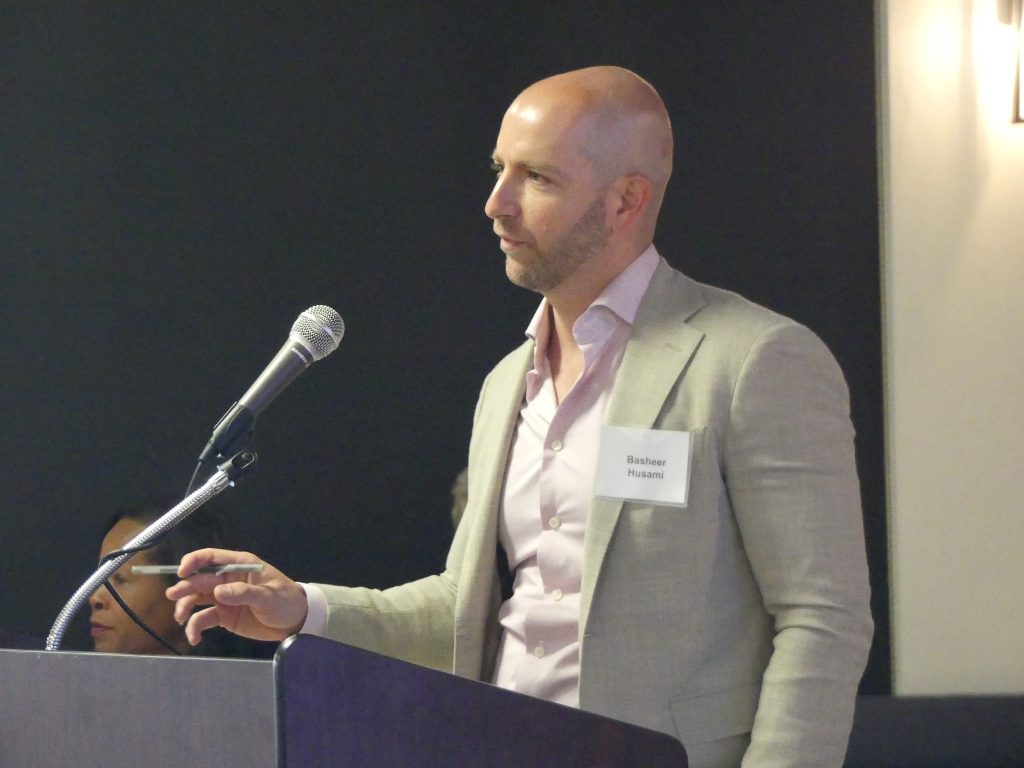
What made Basheer’s talk compelling wasn’t just the technical precision, but the way he connected law to life. He told the story of a family business owner who passed away without a trust: half the estate went to taxes, creditors, and probate costs. The children were forced to sell the business just to pay the IRS. “It wasn’t lack of love,” he said. “It was lack of planning.”
In contrast, he shared about a grandmother who established a charitable trust that provided her grandchildren with annual scholarships. Not only were taxes minimized, but her name became synonymous with education for generations of her family.
Basheer drove home that these aren’t tools reserved for billionaires. “Every family has a legacy,” he reminded the audience. “The difference is whether you design it with intention—or leave it for the IRS and the courts to decide.”
Closing the Gap
Perhaps most powerfully, Basheer addressed the racial wealth gap. Citing data on how quickly inheritances can evaporate without structure, he challenged Black and Latino families in the room to embrace tax and estate planning as a form of empowerment. “Legacy is justice,” he said. “It ensures your children start where you left off, not back at the beginning.”
The standing ovation at the end wasn’t just for the clarity of his strategies, but for the urgency of his call to action. By weaving tax code with cultural reality and deep empathy, Basheer made the case that tax planning is love in action.
In that moment, the Legacy Club became more than an event—it became a movement. And Basheer Husami was the catalyst reminding us that legacy is not just what we leave behind, but how we engineer it today.

- The Family Compound Can Become a Family Trap - October 15, 2026
- The Great Wealth Transfer Can Still Become a Family Mistake - October 15, 2026
- The Inheritance Your Children Are Counting On May Not Be There - October 14, 2026
