The house had always been small when the whole family came over.
On holidays, people ate wherever they could find room: at the kitchen table, on the couch, on folding chairs in the driveway. Children ran through the hallway past framed photographs that had been hanging there so long no one noticed when they tilted. The backyard fence had been repaired in sections over the years, each patch a small record of somebody showing up with tools on a Saturday morning.
To Evelyn’s family, the Inglewood house was not simply property.
It was proof of endurance.
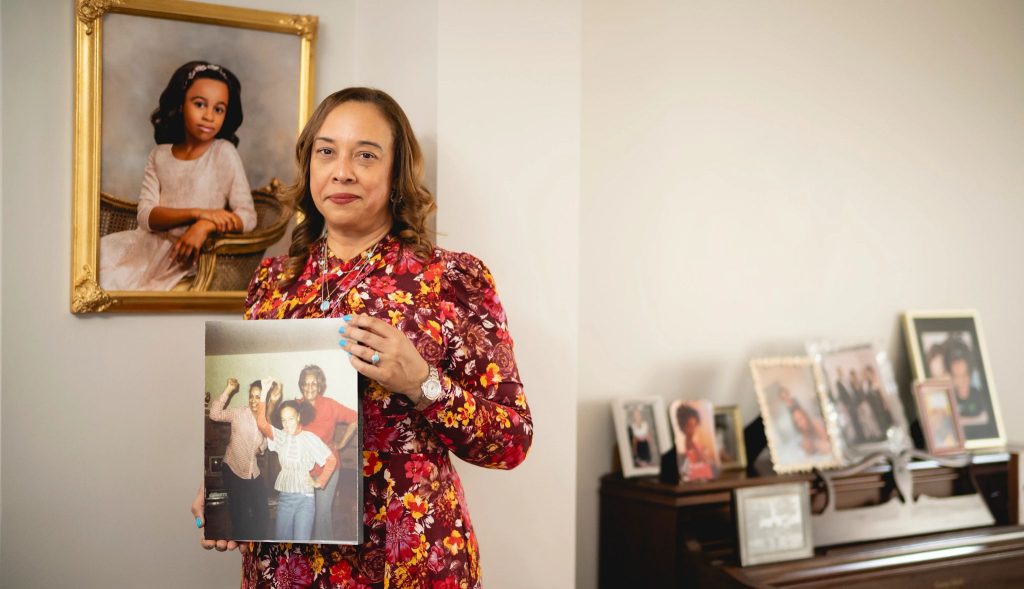
It was where three children had been raised, where grandchildren learned the family stories, where relatives stopped by without calling because that was what the house meant. It was the center of gravity.
So when Evelyn died, her children believed the grief would be the hardest part.
Then they opened the trust.
Evelyn had left instructions. Or at least everyone thought she had. There was a binder. There were signatures. There was the familiar confidence families place in documents they do not fully understand.
The trust divided her estate among her three children: Michael, Teresa, and Daniel.
But Daniel had died two years before his mother.
He left three children.
And now, sitting at the same kitchen table where Evelyn once served coffee after church, the family faced a question no one had expected to ask:
Did Daniel’s children inherit his share?
Or did Daniel’s share disappear because he died first?
Michael, the oldest, read the clause again.
A beneficiary had to survive Evelyn by 30 days.
That seemed clear to him.
Daniel had not survived her. So, Michael said, Daniel’s share should lapse.
Jasmine, Daniel’s oldest daughter, sat across from him.
“My father was her son,” she said.
No one spoke for a moment.
Because everyone knew that was true.
But everyone also knew something else.
The trust did not say enough.
🚨 July 22 Seminar (VERY LIMITED SEATING)
If your family has a trust, beneficiaries, grandchildren, blended family issues, or questions about whether your documents actually say what you intend, join the July 22nd In-Person Wills, Living Trusts & Asset Protection Seminar.
🚨 VERY LIMITED SEATING:
https://collinslawgroup.com/resources/webinar/
Recent California trust litigation has made this issue more than theoretical.
In In re Tung Trust, a California Court of Appeal considered whether a standard survivorship clause was enough to keep a predeceased beneficiary’s children from inheriting by substitution. The Beverly Hills Bar Association’s July 2026 Trusts & Estates update summarized the point clearly: standard survivorship language may not be enough to show a clear intent to override California’s antilapse statute.
That may sound like a narrow legal issue.
It is not.
Inside a family, this kind of language can decide whether grandchildren remain part of the inheritance line or are treated as if their parent’s death erased them from the plan.
And once that question is open, every memory becomes evidence.
Jasmine remembered her grandmother sending birthday cards. She remembered school clothes. She remembered Evelyn holding her hand at Daniel’s funeral. She remembered the photograph of Daniel that stayed beside Evelyn’s bed after he died.
Michael remembered something else: his mother’s concern that the house not be divided too many ways. Teresa remembered conversations that could be interpreted either way, depending on who was listening and what they wanted to hear.
This is how estate disputes begin.
Not always with greed.
Often with ambiguity.
One unclear sentence becomes a family referendum on love, loyalty and belonging.
✅ On Demand (if you can’t attend July 22)
If you cannot attend in person, begin privately with the On Demand seminar and get the estate-planning framework before your family needs it:
https://us02web.zoom.us/rec/share/ww9FPGap2l7hDGQtybVTMqoxibREboe0lSY1ssbubsfk1xn5OnSk1rBR9n_btcYd.LKT0boOpgZq2zY85
The fight over Daniel’s share did not make anyone look their best.
Michael was not trying to be cruel. He believed he was doing what a trustee is supposed to do: follow the document.
Jasmine was not trying to take what was not hers. She believed her father’s place in the family should not vanish simply because he died first.
Teresa wanted peace, but peace without clarity often becomes delay.
And the house sat in the middle of it all.
In Los Angeles County, a family home can carry more weight than almost any other asset. It may represent decades of appreciation, but also decades of sacrifice. It may be the largest financial asset in the estate and the most emotionally loaded.
That makes every unclear clause heavier.
If Daniel’s children received his share, the house might need to be sold or refinanced.
If they did not, Jasmine and her siblings might carry the wound for years.
No option felt clean.
That is why careful drafting matters.
A trust should answer the questions most likely to create conflict:
What happens if a child dies before the parent?
Do that child’s children inherit their parent’s share?
Does the share go only to surviving children?
What happens if one beneficiary received major help during life?
What if a trustee is also a beneficiary?
What happens to the family home?
Can it be sold?
Who decides?
These are uncomfortable questions while everyone is alive.
After death, they become much harder.
🚨 July 22 Seminar (VERY LIMITED SEATING)
If you want to avoid leaving your family with unclear trust language, disputed beneficiary shares, or preventable probate conflict, attend the July 22nd seminar and learn how clear planning protects the people you love.
🚨 VERY LIMITED SEATING:
https://collinslawgroup.com/resources/webinar/
The BHBA update also highlighted Halperin v. Halperin, another recent case that speaks to how inheritance fights can unfold. In that dispute, a daughter alleged that her brothers interfered with their father’s efforts to amend his trust in a way that would have increased her inheritance. The case underscored a procedural but important point: when probate law provides a remedy, families may not be able to repackage the dispute as a separate civil lawsuit.
That sounds like lawyer language.
For families, it means something simpler.
The wrong legal path can cost time.
It can cost money.
It can deepen the fracture.
A trust dispute, an amendment challenge, a trustee-duty issue — these matters often belong in probate court. Filing in the wrong forum can turn an already painful conflict into a longer and more expensive one.
By then, the estate may be paying for the fight.
The house may remain unresolved.
The family may stop speaking.
The cost is not only legal.
It is relational.
Missed holidays. Grandchildren caught between adults. Siblings who communicate only through attorneys. A parent’s legacy reduced to declarations, hearings and suspicion.
Most parents would hate that outcome.
But hating conflict is not the same as preventing it.
Prevention requires clarity.
At some point, Jasmine found an old birthday card from Evelyn.
Inside, Evelyn had written: “You are your father’s heart.”
Jasmine read it at the table and cried.
Michael did too.
The card did not resolve the legal question. It could not rewrite the trust. It could not replace a properly drafted provision.
But it reminded everyone what the dispute was really about.
Not only money.
Recognition.
Continuity.
The fear that one death could erase an entire branch of the family.
That is why a Letter of Instructions can matter. It cannot replace a trust, override California law or fix unclear drafting by itself. But it can explain the human meaning behind the legal plan.
It can say, plainly:
If one of my children dies before me, I want that child’s children to inherit their parent’s share.
Or it can say the opposite:
If one of my children dies before me, I want that share divided only among my surviving children.
Either choice can be valid.
The danger is not choosing.
The danger is leaving the family to argue over what you meant.
✅ On Demand (share with your family)
If your family needs a calm way to begin this conversation, share the On Demand access page and watch together:
https://us02web.zoom.us/rec/share/ww9FPGap2l7hDGQtybVTMqoxibREboe0lSY1ssbubsfk1xn5OnSk1rBR9n_btcYd.LKT0boOpgZq2zY85
We believe a trust should do more than look official.
It should reflect the family as it actually exists.
The children.
The grandchildren.
The blended branches.
The estrangements.
The lifetime gifts.
The people who showed up.
The people who should not be placed in charge.
The home that carries more history than an appraisal will ever show.
Because one sentence can change everything.
It can turn a trustee’s duty into a family accusation.
It can turn grandchildren into outsiders.
It can turn a house of memory into the center of a fight.
Estate planning is not only about transferring assets.
It is about reducing the places where grief can become conflict.
And sometimes, the most loving thing a parent can do is not simply leave a trust.
It is to make sure the trust says exactly what they mean.
🚨 Final July 22 Seminar Nudge (VERY LIMITED SEATING)
If your trust has not been reviewed in years — or if you are not sure what happens when a beneficiary dies before you, a family member contests the plan, or old language no longer matches your wishes — now is the time to act.
Reserve your seat for July 22 now.
🚨 VERY LIMITED SEATING:
https://collinslawgroup.com/resources/webinar/

- The Great Wealth Transfer Can Still Become a Family Mistake - October 15, 2026
- The Inheritance Your Children Are Counting On May Not Be There - October 14, 2026
- When the Family Has to Fight for the Legacy - October 13, 2026
