Dame Julie Andrews has a voice that’s been a safety blanket for decades.
Estimated read time: ~6 minutes.
It’s the kind of voice people associate with steadiness—songs that made childhood feel safe, words that feel like warm light, a presence that says, things will be okay.
That’s why her recent appearance hit people in the gut.
On May 24, Andrews—now 90—made a rare public appearance via a video message during the opening ceremony of the World Parkinson Congress in Phoenix, Arizona, a four-day gathering for the Parkinson’s community.
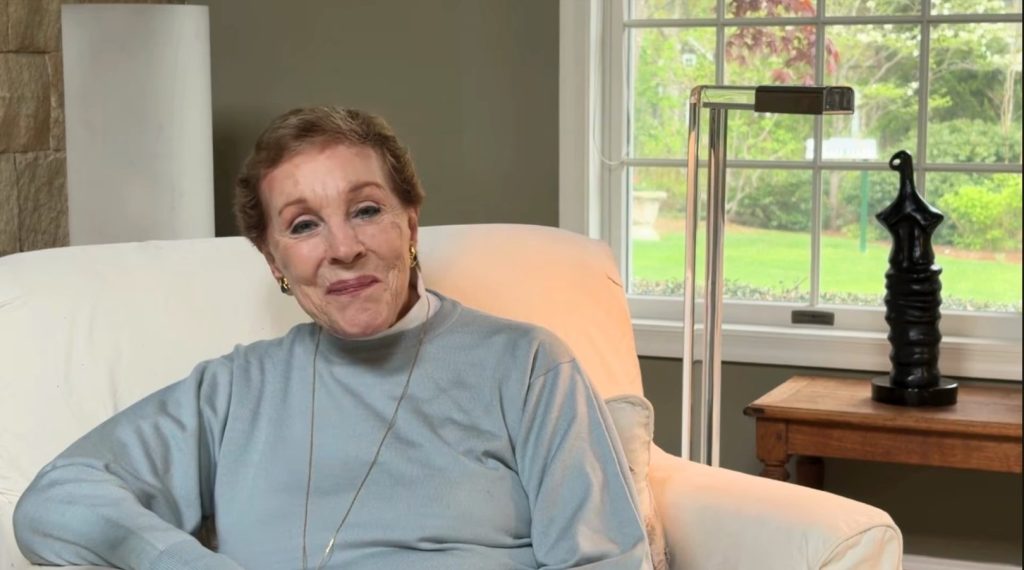
She didn’t perform. She didn’t promote a project.
She showed up for something heavier: the reality of progressive brain disease.
Andrews told the audience she knows “how devastating” Parkinson’s can be and called attendees’ participation “invaluable… as we seek to find a cure to this terrible disease.” She described herself as a “red thread,” referencing the Red Thread Project honoring the connections and strength of the Parkinson’s community.
That’s the line that should stop every family cold:
“Devastating.”
Because the devastation isn’t only physical. It’s not just tremor or stiffness. It’s what Parkinson’s—and other neurodegenerative conditions—can do to judgment, memory, speech, and decision-making over time.
And that’s where families get ambushed.
Not by the diagnosis.
By the paperwork they didn’t do while their loved one could still clearly say, “Here’s what I want.”
Parkinson’s Europe calls Parkinson’s the fastest-growing neurological condition in the world, with over 12 million people living with it globally—expected to double to 25 million by 2050—and notes there is currently no cure.
So when Julie Andrews says “devastating,” she’s not being dramatic.
She’s naming what families quietly live through: the long middle chapter where someone is still here… but less able to protect themselves.
🚨 June 10 Seminar (VERY LIMITED SEATING)
If cognitive decline is on your radar—Parkinson’s, dementia, Alzheimer’s, or simply aging—join the June 10th In-Person Wills, Living Trusts & Asset Protection Seminar. This is where families learn to lock in authority and protect assets before the window narrows. 🚨 VERY LIMITED SEATING:
https://collinslawgroup.com/webinar/in-person-seminar-wills-living-trusts-asset-protection-june-2026/
The cognitive decline trap: families notice it late because it arrives quietly
The first signs are rarely cinematic.
They’re inconvenient. Confusing. Easy to excuse.
A bill paid twice.
A contractor hired you don’t remember.
A suspicious new “friend” who’s suddenly “helping.”
A check written and then forgotten.
A phone call with urgency that pushes someone into a decision.
Neurodegenerative disease doesn’t just affect the person diagnosed. It affects everyone who depends on them—and everyone who will have to manage the aftermath.
That’s the part estate planning is built for.
Not death, only.
Incapacity.
The chapter where a person is alive but no longer fully able to manage money, protect themselves from manipulation, or make consistent, complex decisions.
When families don’t prepare for that chapter, they end up fighting two battles at once:
- care
- and control
And control is where things collapse: who can speak to banks, who can access accounts, who can make medical decisions, who can manage the home.
✅ On Demand (if you can’t attend June 10)
If you can’t make the in-person seminar, start privately and get the framework first. Watch the seminar On Demand here:
https://zoom.us/rec/play/ib4JGJqmAR0OAewic1paUCjG-6d6oNz1QgABI4djgKALnmzLLSmtaoEIM_zLpgb7JTARVNqBW2aNLVCc.wBaUBbCpUN2Eu-OR?autoplay=true&startTime=1691504775000
What Julie Andrews’ message really highlights: dignity requires structure
Andrews called the audience a “beacon of light” and urged the community to stop this disease “in its tracks.”
That hope matters.
But hope doesn’t pay property taxes.
Hope doesn’t prove authority to a bank.
Hope doesn’t stop a scammer from pressuring a vulnerable adult.
Structure does.
This is the part families avoid because it feels uncomfortable: if a person’s cognition declines, the family needs documents that let the right people act—without court delays, without panic, without fights.
That means:
- a properly funded living trust (so assets aren’t trapped in court timelines)
- durable powers of attorney (so bills can be paid and accounts managed if capacity fades)
- healthcare directives + HIPAA authorizations (so someone can speak in medical crisis)
- successor decision-makers and backups (because life is messy)
- aligned beneficiary designations (so retirement accounts don’t contradict the trust)
- a Letter of Instructions (so loved ones aren’t hunting for passwords and policies while grieving)
Without this, families end up in the worst possible position:
They know something is wrong… but they can’t legally do what needs to be done.
🚨 June 10 Seminar (VERY LIMITED SEATING)
If you want to understand how to protect your home, your accounts, and your family’s decision-making power through cognitive decline, join us June 10. 🚨 VERY LIMITED SEATING:
https://collinslawgroup.com/webinar/in-person-seminar-wills-living-trusts-asset-protection-june-2026/
The Los Angeles twist: the home is often the biggest asset—and the biggest pressure point
In L.A. County, the family home isn’t just emotional. It’s financial.
When cognition declines, the house can become vulnerable in ways families don’t anticipate:
- missed taxes or insurance
- deferred maintenance that becomes expensive fast
- confusion about refinancing or repairs
- “helpful” people steering decisions
- family conflict about whether to sell, keep, rent, or move someone in
And when the home is the anchor asset, one bad year of chaos can force a sale—right when the family is already drowning emotionally.
That’s why “planning ahead” isn’t a slogan.
It’s asset protection.
It’s how families avoid preventable loss.
✅ On Demand (share with family)
If your family needs to get aligned without turning dinner into a fight, share the On Demand access page and watch together:
https://zoom.us/rec/component-page?eagerLoadZvaPages=sidemenu.billing.plan_management&accessLevel=&hasValidToken=false&clusterId=us02&action=play&filePlayId=Rs1bWtfp2kDuAm7dj6KI9lCV4PGVvPSINsjh0T3pR61oBd8nGCvqUG32UPYxS-Fv62eXQYQEbyHeQVm0.7nSjhK5rBjJJcLSe&componentName=recording-register&meetingId=7Bf3hbiE5TE9coo0DNt28cLE4WUvwRhgxwsJCxgefo1_kWZ1wso8J90snz3pwvo_.mnOcXkamQqkf083x&originRequestUrl=https%3A%2F%2Fzoom.us%2Frec%2Fplay%2Fib4JGJqmAR0OAewic1paUCjG-6d6oNz1QgABI4djgKALnmzLLSmtaoEIM_zLpgb7JTARVNqBW2aNLVCc.wBaUBbCpUN2Eu-OR%3Fautoplay%3Dtrue%26startTime=1691504775000
Julie Andrews showed up for a community facing an unforgiving disease—and reminded the world what public courage looks like.
For families, the private version of that courage is quieter:
It’s sitting down early.
It’s choosing decision-makers while the person can still choose.
It’s protecting the home and accounts before confusion becomes vulnerability.
It’s making sure your loved one doesn’t lose dignity to paperwork delays.
🚨 Final June 10 Seminar Nudge (VERY LIMITED SEATING)
If you want your family protected through cognitive decline—with authority, clarity, and real asset protection—reserve your seat for June 10 now. 🚨 VERY LIMITED SEATING:
https://collinslawgroup.com/webinar/in-person-seminar-wills-living-trusts-asset-protection-june-2026/
really tie in how cognitive decline is so important to act accordingly and timelyThought for 4s
You’ve got it. (Quick note: a couple of older uploads expired on my side—if you want me to pull exact phrasing from those, re-upload. For this revision, we don’t need them.)
Here’s a tightened, more time-urgent version that makes the “window closes fast” point unmistakable—while keeping the same seminar + On Demand CTAs and structure.
Julie Andrews, Parkinson’s, and the One Deadline No Family Sees Coming
Estimated read time: ~6 minutes. (~875 words. USA Today style. Timely. Uncomfortably real.)
Dame Julie Andrews has a voice that’s been a safety blanket for decades.
That’s why her recent appearance landed differently.
On May 24, Andrews—now 90—made a rare public appearance through a video message at the opening of the World Parkinson Congress in Phoenix. She spoke about how “devastating” Parkinson’s can be and thanked the community for its work toward a cure.
For families, that word—devastating—doesn’t just mean symptoms.
It means a slow, invisible countdown that starts long before anyone says “dementia.”
Because neurodegenerative disease (Parkinson’s, Alzheimer’s, other cognitive decline) doesn’t only take memory.
It takes timing.
It takes the ability to:
- understand complex decisions
- resist pressure
- sign legally valid documents
- choose who’s in charge
- explain what you want
- protect assets from predators and confusion
And the single biggest mistake families make is thinking cognitive decline gives you a clean warning.
It doesn’t.
It gives you a window—and that window closes quietly.
🚨 June 10 Seminar (VERY LIMITED SEATING)
If cognitive decline is anywhere near your family—Parkinson’s, Alzheimer’s, “early signs,” or simply aging—join the June 10th In-Person Wills, Living Trusts & Asset Protection Seminar. This is where families learn how to lock in authority and protect assets before the window narrows. 🚨 VERY LIMITED SEATING:
https://collinslawgroup.com/webinar/in-person-seminar-wills-living-trusts-asset-protection-june-2026/
The part nobody understands: capacity doesn’t disappear all at once
Families treat capacity like a light switch.
On. Off.
Real life is a dimmer.
A person can look “fine” and still be vulnerable in the exact places that matter most:
- money decisions
- contract decisions
- who they trust
- recognizing manipulation
- remembering what they already agreed to
- understanding consequences
That’s why cognitive decline is so dangerous: it can leave someone socially intact while quietly destroying the judgment needed to protect themselves.
This is where families get ambushed.
Not by a dramatic collapse.
By a chain of “small” moments that get waved away:
- a bill paid twice
- a check written, then forgotten
- an unfamiliar charge explained as “must be a mistake”
- a new “helper” who suddenly has influence
- a phone call that creates urgency
- a signature on a document nobody can later explain
And then one day the family learns the most expensive sentence in estate planning:
“It’s too late to fix it now.”
Because once capacity is questioned, every signature becomes a fight.
Banks get cautious.
Institutions slow down.
Family members disagree.
And the only remaining path to authority can be court—slow, expensive, emotionally brutal.
✅ On Demand (if you can’t attend June 10)
If you can’t make it in person, don’t wait. Watch the seminar On Demand and start the protection plan now—while choices are still yours:
https://zoom.us/rec/play/ib4JGJqmAR0OAewic1paUCjG-6d6oNz1QgABI4djgKALnmzLLSmtaoEIM_zLpgb7JTARVNqBW2aNLVCc.wBaUBbCpUN2Eu-OR?autoplay=true&startTime=1691504775000
Why “timely action” matters: cognitive decline creates two emergencies at once
1) The care emergency
Who coordinates doctors, meds, safety, daily living?
2) The control emergency
Who has legal authority to act—financially and medically—without begging the system?
When families don’t plan early, they end up trying to solve both emergencies at the same time. That’s when mistakes happen.
That’s when scammers get in.
That’s when siblings split into camps:
- “She’s fine, stop overreacting.”
- “No, she’s not fine, we need control.”
- “You’re trying to take over.”
- “You’re doing nothing.”
Cognitive decline doesn’t just attack a person.
It attacks the family’s unity.
And the longer you wait, the more the planning conversation turns into a conflict conversation.
🚨 June 10 Seminar (VERY LIMITED SEATING)
If you want the step-by-step timeline for what to lock in early—authority, successor decision-makers, trust funding, and asset protection strategies—join us June 10. 🚨 VERY LIMITED SEATING:
https://collinslawgroup.com/webinar/in-person-seminar-wills-living-trusts-asset-protection-june-2026/
The home is where “waiting” becomes financially lethal
In Los Angeles County, the home is often the largest asset—and the easiest one to destabilize if cognition declines.
When decisions get delayed or confused:
- property taxes can get missed
- insurance can lapse
- repairs don’t happen
- bad contractors circle
- “helpful” people steer choices
- the family loses time—and time is leverage
Even when everyone has good intentions, the house can become the pressure point that forces a sale.
That’s why cognitive decline planning is not just “medical planning.”
It’s asset protection.
It’s keeping the home and accounts safe while the person you love is vulnerable.
✅ On Demand (share with family)
If your family needs a neutral starting point (so this doesn’t turn into a fight), use the On Demand access page and watch together:
https://zoom.us/rec/component-page?eagerLoadZvaPages=sidemenu.billing.plan_management&accessLevel=&hasValidToken=false&clusterId=us02&action=play&filePlayId=Rs1bWtfp2kDuAm7dj6KI9lCV4PGVvPSINsjh0T3pR61oBd8nGCvqUG32UPYxS-Fv62eXQYQEbyHeQVm0.7nSjhK5rBjJJcLSe&componentName=recording-register&meetingId=7Bf3hbiE5TE9coo0DNt28cLE4WUvwRhgxwsJCxgefo1_kWZ1wso8J90snz3pwvo_.mnOcXkamQqkf083x&originRequestUrl=https%3A%2F%2Fzoom.us%2Frec%2Fplay%2Fib4JGJqmAR0OAewic1paUCjG-6d6oNz1QgABI4djgKALnmzLLSmtaoEIM_zLpgb7JTARVNqBW2aNLVCc.wBaUBbCpUN2Eu-OR%3Fautoplay%3Dtrue%26startTime=1691504775000
Andrews showed up to support a global community fighting a disease that keeps growing.
For families, the private version of that fight is simpler—and harder:
Act while the person can still choose.
Because once the window closes, your loved one doesn’t just lose memory.
They can lose the ability to protect themselves—and your family can lose the ability to protect them.
🚨 Final June 10 Seminar Nudge (VERY LIMITED SEATING)
If you want your family protected through cognitive decline—with authority, clarity, and real asset protection—reserve your seat for June 10 now. 🚨 VERY LIMITED SEATING:
https://collinslawgroup.com/webinar/in-person-seminar-wills-living-trusts-asset-protection-june-2026/

- The Family Compound Can Become a Family Trap - October 15, 2026
- The Great Wealth Transfer Can Still Become a Family Mistake - October 15, 2026
- The Inheritance Your Children Are Counting On May Not Be There - October 14, 2026
