Los Angeles is full of “legacy” talk. But most legacy is just a story we tell ourselves while the paperwork sits untouched.
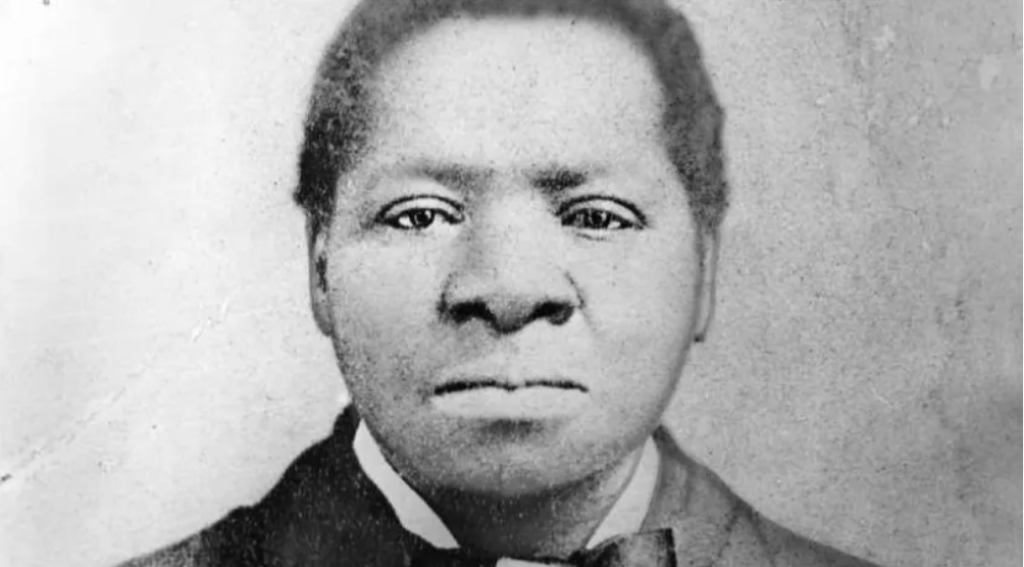
The Biddy Mason Charitable Foundation (BMCF) is different. It’s proof that when impact is structured—when it’s designed to outlive you—it becomes a force that keeps working long after the headlines fade.
And it starts with the woman whose name it carries.
Biddy Mason’s history isn’t inspirational. It’s instructive.
Bridget “Biddy” Mason was born enslaved. She was brought west, and in 1856, she did something radical: she used the legal system to secure freedom for herself and others. BMCF’s own history explicitly honors that moment—naming her as a formerly enslaved woman who won freedom for herself and 12 others.
Most people would have treated freedom as the finish line.
Biddy treated it like the starting gun.
She worked as a nurse and midwife. She earned. She saved. She bought property. She invested. She became known as an entrepreneur and philanthropist in a Los Angeles that was still deciding who was allowed to belong. BMCF describes her as one of the city’s most influential entrepreneurs, philanthropists, and humanitarians.
And downtown, her legacy has an address you can physically stand on:
Biddy Mason Memorial Park — 333 S. Spring Street, Los Angeles, CA 90013.
That isn’t just a location. It’s a lesson: ownership and law are how you keep a life from being erased.
If you’re reading this and thinking, “I want my estate plan to do more than distribute assets—I want it to protect my family and strengthen my community,” that’s exactly the kind of thinking we unpack in person at the March 4th Wills, Living Trusts & Asset Protection Seminar (limited seating 🚨). Register here:
https://collinslawgroup.com/resources/webinar/
What makes BMCF a masterclass is that it didn’t stop at “meaning.”
It became a machine.
BMCF traces its organizational roots to 2013, starting as a ministry connected to First AME Church—and later becoming an independent nonprofit.
In 2013, they hosted their first Thanksgiving dinner for foster youth.
In 2016, they became an independent 501(c)(3).
Then they built the kind of program that turns compassion into measurable outcomes: scholarships for current and former foster youth in Los Angeles County.
And the numbers are not small.
BMCF reports that since launching its scholarship program in 2018, it has awarded scholarships to more than 200 foster youth and distributed more than $700,000 in scholarship aid—with a stated goal of reaching $1 million in cumulative scholarships by 2027.
That’s legacy done right: repeatable help.
Not a one-time donation. Not a “we should do something.” A structure that keeps delivering.
If you want the fastest way to understand how families build that kind of structure—without guessing and without getting overwhelmed—watch the firm’s session On Demand and start from a position of clarity:
https://zoom.us/rec/play/ib4JGJqmAR0OAewic1paUCjG-6d6oNz1QgABI4djgKALnmzLLSmtaoEIM_zLpgb7JTARVNqBW2aNLVCc.wBaUBbCpUN2Eu-OR?autoplay=true&startTime=1691504775000
The real estate-planning connection: intention is not a plan
Most people assume legacy happens automatically:
“I’m a good person.”
“My family knows what I want.”
“They’ll do the right thing.”
“We’ll figure it out later.”
But “later” is where legacies go to die.
Because life interrupts.
Caregiving costs show up. Incapacity hits. Someone loses a job. Siblings disagree. A trustee freezes. A home becomes a pressure point. Court delays creep in. And suddenly your “I wanted to give back” becomes “we couldn’t.”
BMCF is proof that generosity survives when it’s designed to survive.
That’s why charitable estate planning matters—not as a fancy add-on, but as a way to prevent your values from getting rewritten by chaos.
Here’s the simplest way to think about it:
- A direct gift is a moment.
- A planned gift is a system.
Planned giving tools—like charitable gifts through a trust, or charitable trust strategies depending on your goals—can help you do what BMCF demonstrates at scale: keep impact alive beyond one person’s availability, energy, or lifetime.
And if you’re thinking, “My family needs to hear this too—but if I bring it up, it’ll turn into a fight,” use the On Demand link as the neutral third party. Watch it together. Let the information do the heavy lifting:
https://zoom.us/rec/play/ib4JGJqmAR0OAewic1paUCjG-6d6oNz1QgABI4djgKALnmzLLSmtaoEIM_zLpgb7JTARVNqBW2aNLVCc.wBaUBbCpUN2Eu-OR?autoplay=true&startTime=1691504775000
Biddy’s lesson, translated for 2026 Los Angeles
Biddy Mason used the tools available to her—law, work, ownership, community—to build something that could not be easily undone.
BMCF takes that same philosophy and applies it to one of L.A.’s most vulnerable transition points: what happens to foster youth when support disappears.
That’s why this foundation is a masterclass in legacy done right.
Because it answers the only question that matters:
Will your impact survive you?
If you want your own plan to hold up the same way—protecting your family while creating sustained community impact—come to the March 4th seminar (limited seating 🚨). It’s designed to replace “hope” with an actual framework.
https://collinslawgroup.com/resources/webinar/
Biddy Mason’s name is already written into the city at 333 S. Spring Street.
The better question is: what will your name do after you’re gone?

- The Family Compound Can Become a Family Trap - October 15, 2026
- The Great Wealth Transfer Can Still Become a Family Mistake - October 15, 2026
- The Inheritance Your Children Are Counting On May Not Be There - October 14, 2026
